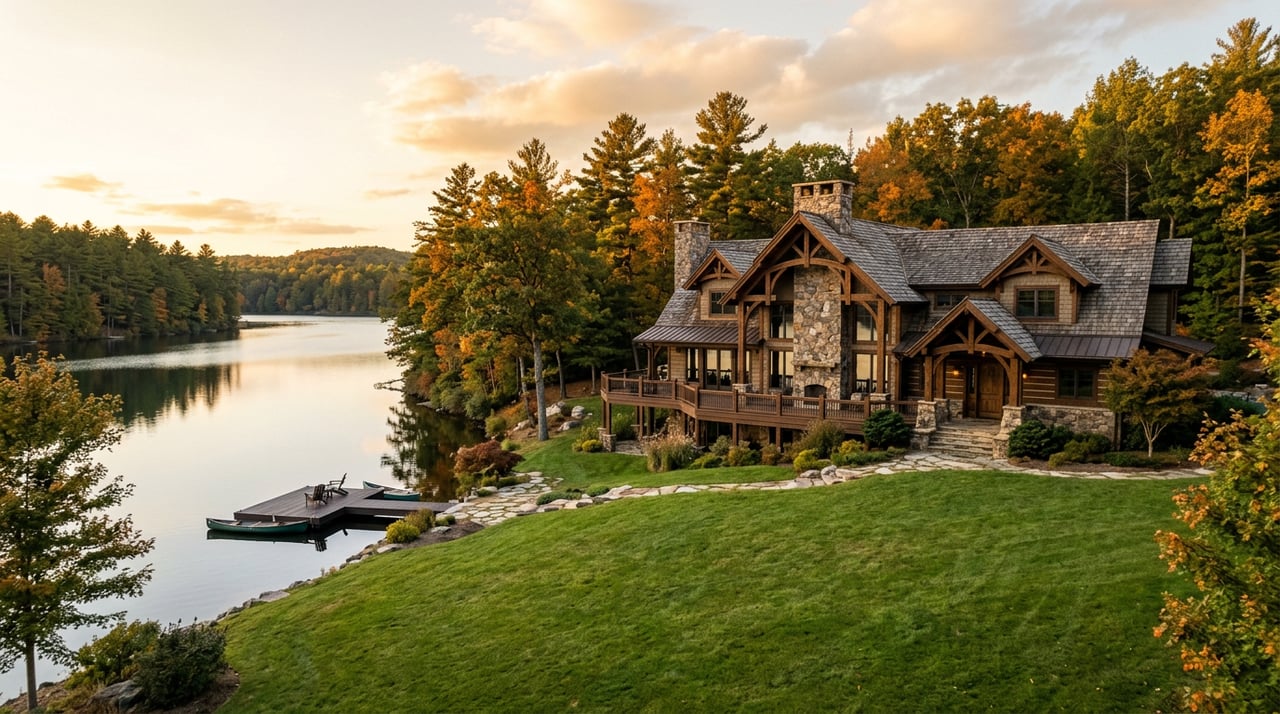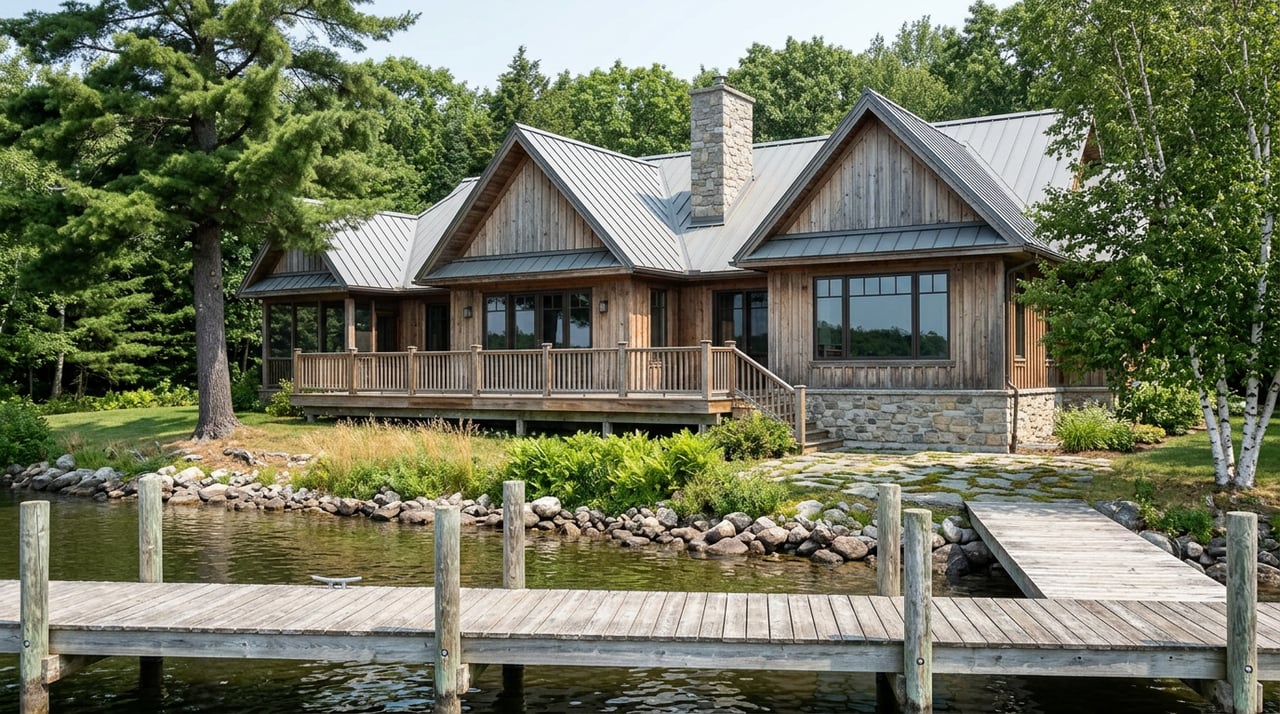
A family has owned a place on the Whitefish Chain for three decades. The kids grew up jumping off the same dock every July. Now the parents are getting older, one of their adult children is ready to leave the Twin Cities behind, and the plan seems obvious: move into the cabin full time, file for homestead status with the county, and let the tax bill come down along with everything else that changes.
That plan works for plenty of Minnesota families. It does not work for a lake cabin that has already spent any time under its current owner classified as seasonal residential recreational, which is the default bucket for nearly every part-time-use property on Cross Lake and the rest of the Whitefish Chain. Once that classification attaches, Minnesota law closes the relative homestead door permanently for that owner. Not temporarily. Not until the classification is reviewed again next year. Permanently, unless the actual titled owner is the one who moves in.
The Move Most Cabin Families Assume They Can Make Later
Minnesota's relative homestead provision lets a property owner extend homestead tax treatment to a property occupied by a qualifying relative rather than by the owner. A parent, child, grandparent, grandchild, sibling, aunt, uncle, niece, or nephew can occupy the property as their primary residence, and the owner applies for the same classification benefit that would apply if they lived there themselves.
For families with a lake place that has been in the family for years, this looks like the natural next chapter. Grandpa and Grandma keep the title, an adult grandchild moves in full time, and the county reclassifies the cabin as a homestead because someone in the family now actually lives there year-round. Crow Wing County's own Land Services department confirms that a qualifying relative can trigger a homestead classification, and processes those applications every year alongside standard owner-occupied filings.
What most families do not check first is whether the cabin already carries a classification history that rules this path out before the application ever reaches a reviewer's desk.
The Rule Crow Wing County Applies Before Any of That Matters
Crow Wing County's homestead page states the limitation directly: property currently or previously classified as seasonal recreational for the owner does not qualify for a relative homestead. The rule comes from state law, Minnesota Statute 273.124, and it is not unique to Crow Wing County. Assessors in Pine, Wabasha, and Meeker Counties post nearly identical language, which tells you this is a statewide mechanism, not a local quirk someone at the courthouse invented.
The reduction that comes with homestead status is real. Crow Wing County's assessing services supervisor, Michaelle Cronquist, has put it plainly in a county announcement: "receiving homestead on your property may make a substantial reduction to your property taxes." That is exactly why families go looking for a way in. It is also why the rule blocking the relative pathway matters so much when a cabin's history already disqualifies it.
Once a property has been classified as seasonal residential recreational under its current owner, that owner cannot reclassify it as a homestead through a relative's occupancy. Only the owner's own occupancy can undo it.
Why the "Current Owner" Clause Is the Real Trap
The part of the statute that catches families off guard is the phrase "current owner." The bar is not permanent in the abstract. It is permanent for a specific person's ownership of a specific property. That distinction matters more than it sounds like it should.
If Mom and Dad have owned the Cross Lake cabin for thirty years and the county has always classified it as seasonal recreational because they only used it summers, their ownership carries that history forward indefinitely. No amount of a grandchild moving in changes it, because the statute is written around who owns the property, not who lives in it. The occupancy test that works for a first-time relative homestead application does nothing here, because the classification history disqualifies the application before occupancy is even evaluated.
What can change the outcome is a change in who the owner is. The statute's bar only reaches back through "the current owner or spouse of the current owner." If title actually transfers to a different person, someone who has never owned the property while it carried the seasonal recreational classification, that new owner starts with a clean history under this specific rule. This is why the timing of a deed matters as much as the timing of a move-in date. A succession plan built entirely around when someone moves to the lake, without any thought to when or whether title changes hands, is very often the plan that fails.
None of this is a reason to restructure ownership without professional guidance. A change in title has its own consequences for gift tax exposure, capital gains basis, and estate planning that sit well outside what a county assessor's office handles. The point is narrower: know that occupancy alone will not flip a classification that ownership history has already locked, and loop in both the assessor's office and a Minnesota attorney before, not after, a family member packs boxes.
What the Classification Actually Costs, Beyond the Headline Rate
For assessment year 2026, the state's own rate tables show something that surprises people who assume seasonal recreational cabins are taxed at a dramatically higher percentage than a homestead. On the local tax capacity calculation, they are not. Both a class 1a homestead and a noncommercial seasonal recreational cabin share the same headline rate structure: 1.00 percent on the first $500,000 of taxable market value and 1.25 percent above that.
The real gap sits outside that headline number.
| Owner-occupied homestead | Relative homestead | Seasonal recreational (unqualified) | |
|---|---|---|---|
| Local class rate | 1.00% / 1.25% | 1.00% / 1.25% | 1.00% / 1.25% |
| Homestead market value exclusion | Yes | Yes, for the homesteaded portion | No |
| Subject to state general property tax | No | No | Yes |
| Owner or occupant eligible for state property tax refund | Owner may be eligible | Neither owner nor relative is eligible | Not applicable |
A cabin stuck as seasonal recreational pays a state general property tax that homesteaded property, whether owner-occupied or relative-occupied, is exempt from entirely. It also misses out on the homestead market value exclusion, which shrinks the taxable value used to calculate the bill before any rate gets applied. That is where Cronquist's "substantial reduction" actually comes from, and it is exactly the reduction a cabin permanently classified as seasonal recreational can never reach through a relative's occupancy.
The Two Paths That Still Lead to Homestead Status
Two routes actually work under Minnesota law for a cabin that already carries seasonal recreational history under its current owner.
- The owner moves in personally. If the titled owner, not a relative, occupies the cabin as their own primary residence and meets Minnesota residency requirements, the classification can convert to a standard owner-occupied homestead. The relative homestead pathway stays blocked, but the owner-occupied pathway was never subject to this particular bar.
- Title changes to someone with no seasonal recreational history on the property. A new owner who has never held title to the cabin while it carried that classification starts fresh under this specific provision. Whether a relative homestead then becomes available depends on that new owner meeting the standard relative homestead requirements from scratch, with its own residency and application rules.
Both paths carry real financial and legal weight that goes beyond property tax classification, and both should be worked through with a Minnesota attorney and the county assessor's office rather than assumed from a blog post, even a well-sourced one.
What This Means If a Cross Lake Cabin Is Part of Your Family's Plan
If a family cabin on Cross Lake, Rush Lake, or anywhere along the Whitefish Chain is likely to become someone's full-time home eventually, the smartest time to check its current classification is now, not the year someone actually moves in. Crow Wing County Land Services can confirm how a specific parcel is currently classified and has been classified under its present owner. That single phone call, made years before a move, tells a family whether the relative homestead path is still open or whether it closed sometime in the past without anyone noticing.
Applications for both owner-occupied and relative-occupied homestead status are due to Crow Wing County Land Services by December 31 each year to take effect on the following year's tax bill. Missing that window by even a few days pushes the benefit out an entire tax cycle.
A Short FAQ
Does this rule apply to a cabin that was already homesteaded before I bought it? The bar tracks the current owner, not the parcel's entire history. If a previous owner had the cabin classified as a homestead and you purchased it as your primary residence, your own occupancy establishes a new homestead history under your ownership.
What if my cabin has never been used enough to get classified as seasonal recreational at all? Some properties, particularly newer purchases or ones the county has not yet formally reviewed, may not carry a seasonal recreational classification yet. Confirming current status directly with the assessor's office is the only reliable way to know before making any plans around it.
Where do I find out how my Cross Lake property is classified right now? Crow Wing County Land Services handles both classification records and homestead applications, and can tell you exactly how a specific parcel is currently coded.
A family cabin's tax classification is easy to overlook until the year it actually matters. If you are weighing what a Cross Lake or Whitefish Chain property might look like a decade from now, whether that means eventually living there full time, passing it to the next generation, or selling it while the timing still works in your favor, Sarah Morrison has spent more than eleven years helping Northern Minnesota families think through exactly these questions before they become urgent ones. Let's Connect.