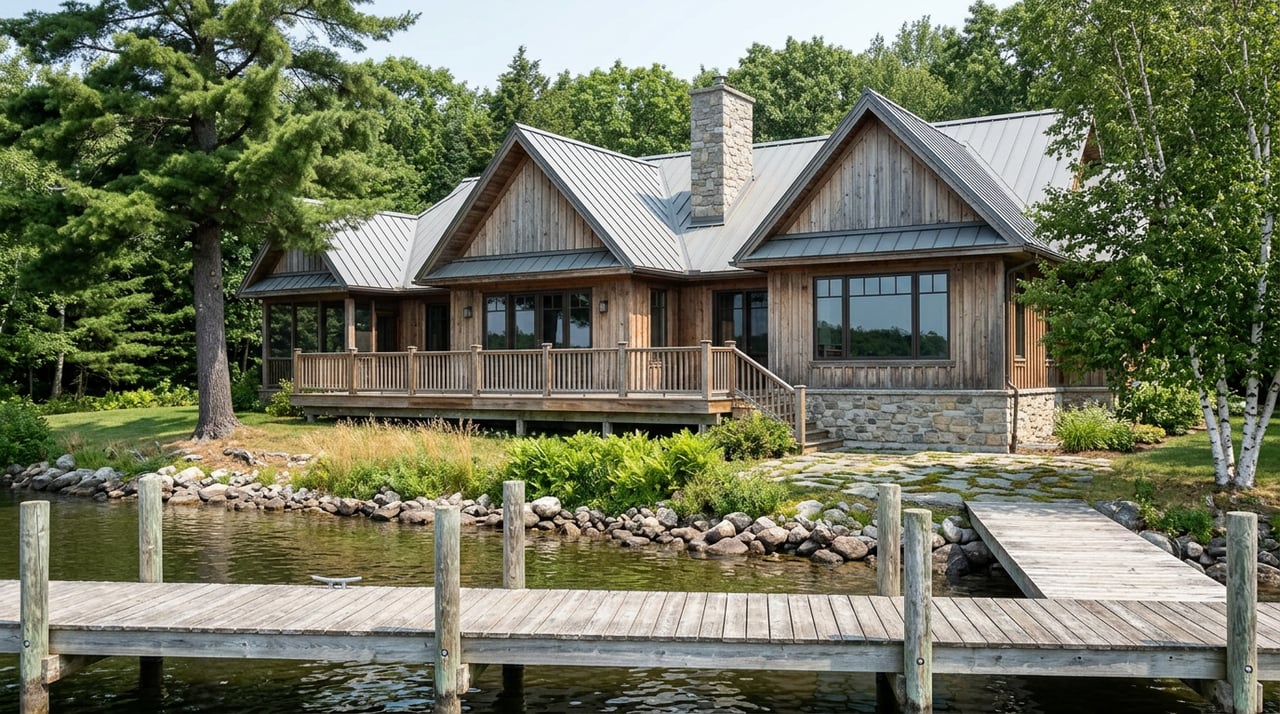
Two cabins go on the market the same week, half a mile apart on the south shore of Leech Lake. Same era, same square footage, same asking price within a few thousand dollars. One closes in six weeks. The other stalls for two months while a seller who has lived there for fifteen years without a single plumbing problem scrambles to find a licensed inspector, then an installer, then a way to explain the delay to a buyer who thought they were thirty days from the dock.
The difference between those two closings usually isn't the house. It's a single word buried in Cass County's sewage ordinance: transfer.
The Trigger Isn't Listing Day. It's Transfer Day.
Minnesota doesn't require a septic compliance inspection at every sale statewide. That decision is left to counties, cities, and townships, and Cass County has made its choice explicit. Under the county's Subsurface Sewage Treatment System ordinance, a compliance inspection is required at the transfer of property, alongside triggers like adding a bedroom, applying for a land use permit, or reporting a sewage backup.
That distinction matters because it means the clock doesn't start when a sign goes up in the yard. It starts when a purchase agreement is signed and the property legally changes hands. A seller can list a home in June, accept an offer in July, and only then discover the system needs a licensed inspector to walk the site, open the tank, and check soil separation before the county will sign off. If that inspection turns up a problem, the fix has to happen inside the window the purchase agreement allows, not on the seller's own schedule.
The ordinance also sets a shelf life on compliance itself. A newer or replaced system carries a five-year certificate. An older, existing system carries three.
| System type | Certificate valid for |
|---|---|
| New or replacement SSTS | 5 years |
| Existing SSTS (built before current standards) | 3 years |
A seller whose septic was installed or replaced recently may already hold a certificate that covers the sale outright. A seller whose system dates back further, which describes a large share of the cabins ringing Leech Lake, is far more likely to need a fresh inspection triggered by the transfer itself. Two cabins built the same decade, sold the same summer, can land on opposite sides of that line depending on nothing more than when the tank was last swapped out.
The County Office Handling This Sits in Walker
Here's the part that rarely makes it into a general Minnesota septic explainer. The department that administers this ordinance, reviews the paperwork, and issues the certificate isn't a distant state agency. Cass County Environmental Services is headquartered at the Cass County Courthouse, 303 Minnesota Ave W, right in Walker. For anyone selling a home on Leech Lake, Woman Lake, or one of the smaller lakes ringing the county, the office that decides whether a closing proceeds on schedule is a short drive from the property itself, not a call center in St. Paul.
That proximity cuts both ways. It means a seller can walk in, ask direct questions, and get a straight answer about whether an existing certificate is still valid. It also means there's no ambiguity about who is enforcing the rule. This is a local requirement, run by a local office, applied to a very specific and very local kind of housing stock: older lake cabins built well before today's shoreland standards existed.
What Happens When the Tank Doesn't Pass
A failed inspection doesn't automatically kill a sale, but it does introduce a mechanism most buyers have never dealt with before: escrow. Cass County's own permit paperwork includes a Septic Escrow Agreement, a form built specifically for situations where a system is found noncompliant during a transfer. Instead of forcing a full septic replacement before closing, an escrow agreement lets the sale proceed while funds are set aside to cover the fix afterward.
That's a meaningful option for a market like this one, where a full system replacement on a shoreland lot, with the deeper setbacks and often more complex soil work that comes with proximity to the lake, can take weeks to schedule with a licensed installer. Escrow buys time without freezing the deal. But it only works if both sides know it exists and negotiate it into the purchase agreement early, not after the inspection report already arrives with a "does not comply" stamped across the top.
This is exactly why some sellers in this market have started treating septic status as a selling point rather than a formality. A recent listing near Walker and Leech Lake, a fifteen-acre property on Little Turtle Lake bordering the Paul Bunyan State Forest, called out its compliant septic system in the marketing description, right alongside the walkout basement and the wood heat. That's not decoration. On a lake where an aging system is common enough to be a real closing risk, a documented, current compliance certificate is a concrete advantage, the kind of detail that lets a buyer's agent move faster because one variable is already resolved.
What This Means If You're Listing This Year, or Making an Offer
For sellers, the practical move is to find out where your system's certificate stands before a buyer's offer forces the question. If your last certificate of compliance is creeping past its three-year mark, or you've never had one issued at all, getting an inspection scheduled before you list removes the biggest variable from your timeline. A typical compliance inspection in Minnesota runs in the neighborhood of $400 to $700 depending on the system and how easily the tank and drainfield can be accessed, a manageable cost compared to a closing delay measured in weeks.
For buyers, the useful habit is to ask the question directly rather than assuming a lake home's plumbing is someone else's problem to solve later. Request the seller's most recent certificate of compliance and its issue date as part of your offer, the same way you'd ask about a well or a roof. If the certificate is close to expiring, or doesn't exist, build the possibility of an escrow arrangement into the purchase agreement from the start instead of discovering it mid-transaction.
With roughly 69 active Leech Lake listings on the market as of early June 2026 and an average asking price around $523,523, a meaningful share of that inventory is exactly the kind of older, shoreland cabin this ordinance was written for. The septic line item on a listing sheet is rarely the headline. In this market, it's often the thing that decides whether your closing date holds.
A Short FAQ
Does every home sale in Cass County require a septic inspection? Not automatically. The requirement is tied to specific triggers under the county's ordinance, and transfer of property is one of them. A seller whose certificate of compliance is still within its valid window, three years for an existing system or five for a new or replacement one, may not need a new inspection at all.
Who performs the inspection? A state-licensed compliance inspector, someone certified as a Designer or Inspector under Minnesota's SSTS licensing rules. The county office in Walker can point sellers toward licensed local inspectors.
What if the system fails? Cass County's escrow agreement process allows a sale to proceed while funds are held to cover the required repair or replacement, rather than requiring the work to be finished before closing.
Where do I go to check my property's certificate status? Cass County Environmental Services, based at the courthouse in Walker, maintains the compliance records tied to each property's SSTS.
If you're weighing a sale on Leech Lake this year, or you're looking at an older cabin and want to understand what its septic history might mean for your timeline, Sarah Morrison has spent more than a decade working through exactly this kind of local detail with waterfront buyers and sellers around Walker. Let's Connect before the paperwork becomes the thing standing between you and the dock.